
October 10, 2026


Few things deflate a planting plan faster than a spade that sinks into soup. Lawns turn to sponge, roses sulk, and the border quietly drowns. Willows take that same waterlogged corner and make it look deliberate — but only if you choose a species that genuinely wants wet feet. Some willows revel in a bog; others merely survive one and decline over a few seasons. Here are the ones worth planting, how to match them to the sort of wet you actually have, and how to get them established without losing them to rot.
Willows evolved along rivers, lake margins and fen edges, so they are built for soil that spends part of the year under water. They root readily from cuttings and broken branches — a whippy stem pushed into damp mud in January is often a small tree by autumn, which is why osier beds and riverside thickets regenerate so quickly after a flood. They tolerate winter flooding and a high water table better than almost any other tree you can plant in a British garden.
Part of that is physiological. Willow roots cope with low oxygen far better than those of most trees, and they throw out masses of fine surface roots that forage in the top few inches of soil — exactly where floodwater drains and warms first. Willows also grow fast, so they power through a cold, wet season instead of sitting still and sulking the way a young beech or apple would.
That tolerance has limits. Willow roots still need oxygen, and the real enemy is not water but stagnant, airless, compacted ground — a badly drained clay pan, a sealed bed, a hollow that fills and never empties. If you dig a test hole and it stays brimful for days, plant elsewhere or sort the drainage first, because a willow in a sump rots at the crown like anything else. Willows also drink hard. A large one will pull moisture from a wide area, which is wonderful for a boggy lawn and disastrous next to a drain, a boundary wall or foundations. Treat a big willow as a tree whose roots reach at least as far as its canopy, usually further, and site it accordingly.
These are the species and cultivars that reliably do well in damp, heavy or seasonally flooded ground in the UK. All are hardy, and all grow faster than you expect.
Goat willow (Salix caprea) deserves a mention: it tolerates damp clay and heavy soil, though it prefers ground that drains. It is also one of the earliest sources of pollen for bees, so it earns its place in any wet corner that dries out by midsummer.
Not all wet ground is the same, and the difference between a bog that squelches all year and a clay soil that floods for six weeks in winter decides which willow thrives rather than merely hangs on.
Where the water table sits at or near the surface through the growing season, choose willows that will accept roots in saturated soil: creeping willow, osier and grey willow are the safest bets, with eared willow on acid ground. Plant them at the waterline with the crown just above the winter high-water mark and let them find their own level. Larger willows will grow here too, but only if the water is moving rather than stagnant.
This is the most common wet garden in Britain, and it is a swing many trees dislike. White willow and its cultivars cope well, as does scarlet willow kept as a coppice stool, plus osier and goat willow. Plant in early spring, when the worst of the standing water has gone but the soil is still moist, then mulch generously so the ground does not crack in July. A willow settled in for two summers will handle almost anything afterwards.
Here the natives win. Grey willow dominates wet woodland and fen, eared willow belongs to bogs and wet heath, and creeping willow will thread through heather and cotton grass. Add a little lime-free compost at planting, disturb the peat as little as possible, and keep the area open — these are small willows that vanish under brambles if you look away for a season.
Forget the weeping willow. Coppiced purple, almond and scarlet willows give you the willow look without the scale: cut them to a low stool each spring and they stay under 2m while producing a dense mass of colourful young stems for winter. Creeping willow makes a low silver carpet at the front of a damp border, and 'Sericea' can be pollarded if you have room for a trunk but not a giant.
Willows are best planted dormant, between late November and early March, and bare-root plants almost always beat containerised ones because they settle faster and cost a fraction as much. Whips and cuttings — tr
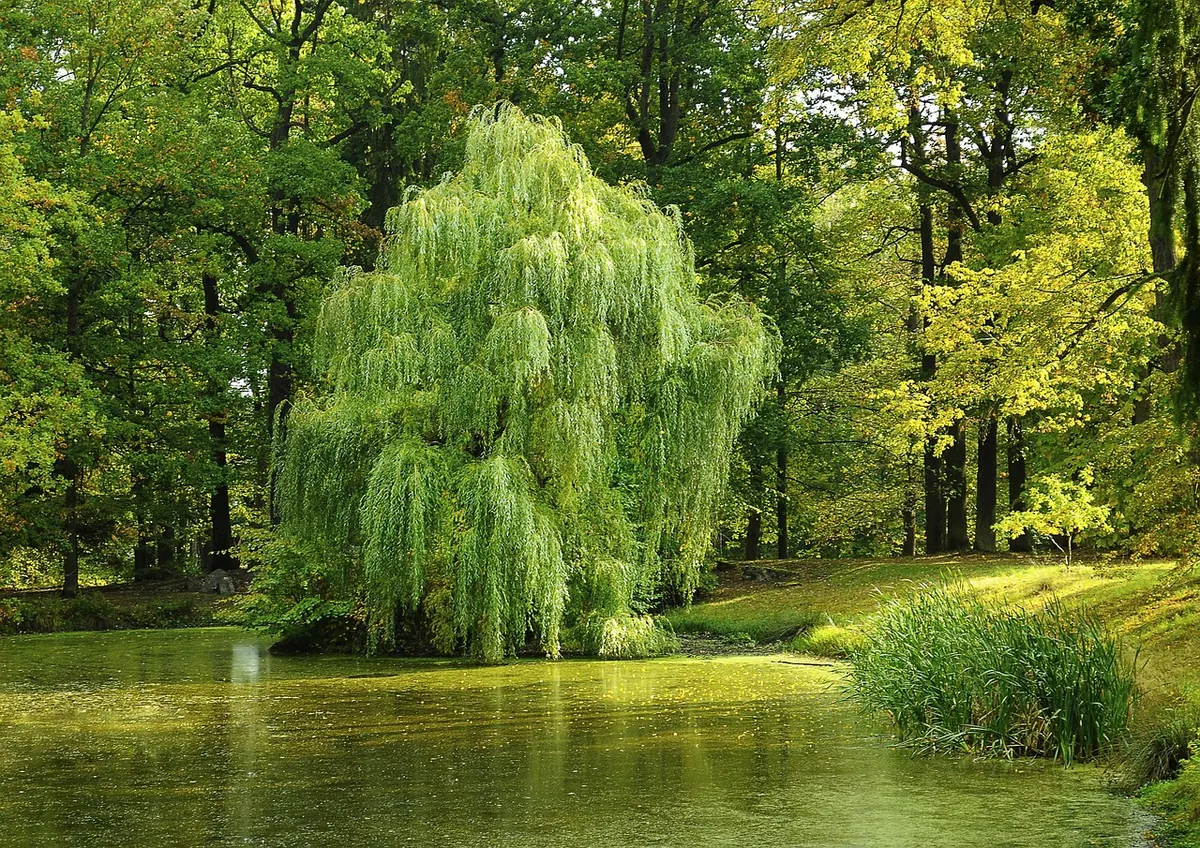
Photo: Yummymoon / Pixabay

Your guide to growing and using willow.
Copyright © 2026 Willow Guide. All rights reserved. Willow Guide.