October 10, 2026



Willows are among the toughest trees you can grow in Britain. They will accept a wet site, an exposed site, and soil that would have most ornamentals sulking within a season. Winter, for a willow, is simply dormancy — not a crisis. But that is not the same as needing nothing from you between November and March.
The damage you notice in spring — blackened shoot tips, a strip of torn bark, a trunk that rocks when you push it — is almost always done in the depths of winter, when you are least likely to be out in the garden looking. So pick a dry, bright day once the leaves are down, when the bare framework of the tree is finally visible, and work through the points below. An hour now saves a lot of guesswork in May.
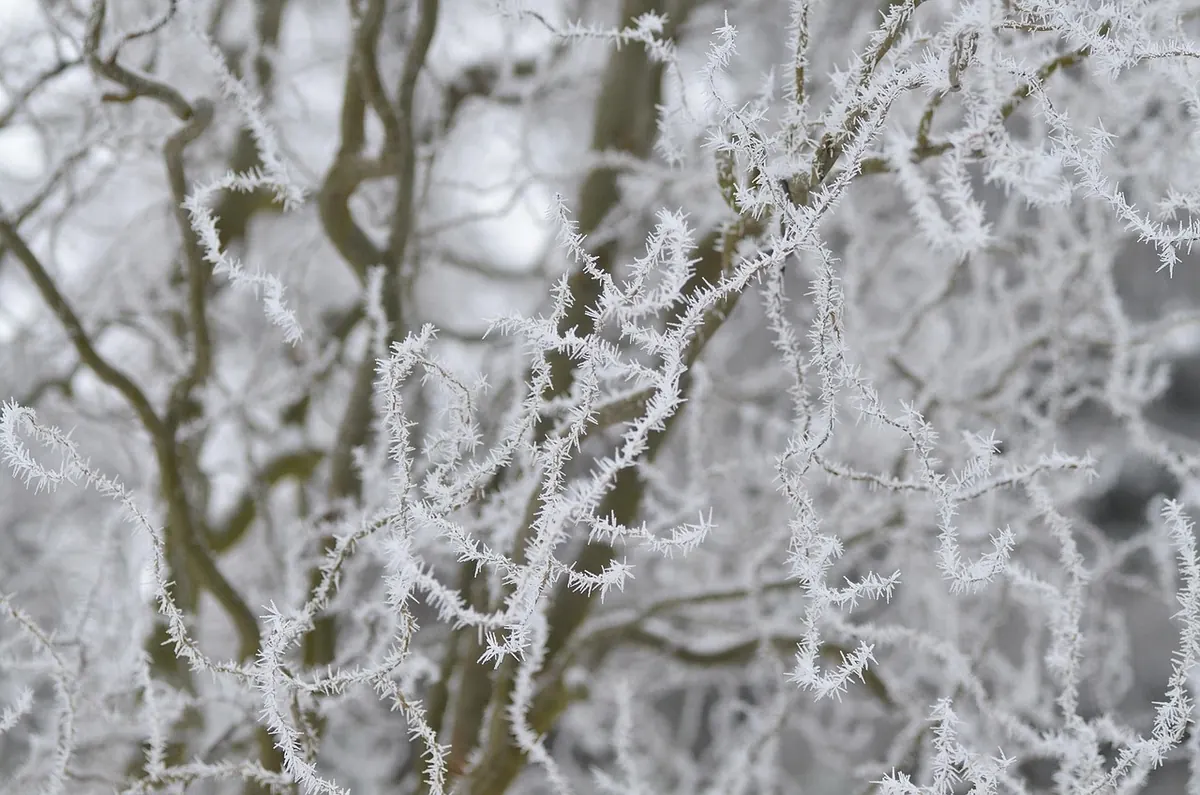
Cold on its own is rarely the problem. Most willows grown here — Salix alba, goat willow, crack willow and their many cultivars — are perfectly hardy. What hurts them is the combination of wind, saturated ground and frost working on the soil surface.
Willow wood is fast-grown and brittle. Long shoots put on in a wet summer can snap in a gale, and weeping willows in particular are known for shedding branches in wind and under the weight of wet snow. Then there is the ground: a young willow rocked loose by winter gales loses fine roots, and can struggle badly the following summer even though the soil around it is wet. Add a tie that has started to bite into swelling bark, and you have an open wound at the worst time of year.
Mulching is the single most useful thing you can do for a willow in autumn. It insulates the soil against repeated freezing and thawing, which is what lifts newly planted trees out of the ground, and it keeps moisture levels steadier through dry spells with an east wind.
If you garden on an exposed site, a permeable windbreak on the prevailing wind side — a native hedge, a slatted fence or a woven hurdle — makes a real difference to a young or weeping willow. It should sit a few metres away from the tree so it slows the wind rather than funnelling it.
What you want to avoid is a solid barrier close to the trunk, which creates damaging eddies on its lee side, and any kind of plastic wrapping or fleece cocoon. Willows need air around their stems. On the coast, salt-laden wind will scorch buds and young bark, so shelter matters even for tough species such as white willow and osier.
After heavy snow, knock the weight off low, flexible branches with a soft broom, working from underneath and never shaking a limb you cannot see. Better to leave a high branch alone than to snap it trying to help.
Winter is when this job is easiest, because you can see the whole stem. A tie that fitted in June may be cutting into the trunk by January, and a stake that was firm in autumn may have rotted at ground level.
Broken branches should come off promptly rather than waiting for a tidy-up in March. Make the cut cleanly, either back to a healthy side shoot or to the branch collar — the slight swelling where the branch meets the trunk. Do not leave long stubs, which die back and let decay into the parent wood.
Where bark has been torn, trim the ragged edges back to sound bark with a sharp knife. There is no need to paint the wound; modern practice is to leave it open to seal naturally. Sharp tools matter more than anything else here — a ragged cut from a blunt saw heals slowly.
If a large limb is hanging above head height, over a path, a roof or a cable, or if the tear runs deep into the trunk, stop and call a qualified arborist. Do not climb a wet ladder in frost, and do not stand under a branch you are about to cut. Winter is also a good time for planned pruning, since willows respond strongly and many are coppiced or pollarded while dormant — but leave the saw in the shed during hard frost, when the wood is at its most brittle.
Willows in containers are the ones most likely to suffer. Roots in a small pot can freeze solid, and terracotta can crack. Move pots against a sheltered wall, stand them on feet so the drainage holes stay clear, and insulate the outside with hessian or bubble wrap. Plunging the pot into a bed of bark or soil is even better. Check the compost occasionally — cold winds dry pots out surprisingly fast, even in January — but never water a frozen pot.
In the open ground, willows like damp soil but not stagnant water sitting around the roots all winter. On heavy clay, plant on a slight mound so excess water drains away from the crown, and keep de-icing salt off the surrounding bed, using grit or sand on paths instead.
None of it is difficult, and most of it takes a single afternoon. Do it while the tree is bare and you can see what you are doing, and by March — when the first catkins open on the bare stems and the bees find them — you will know at a glance which parts of the willow came through the winter in good shape.
Photo: janakudrnova / Pixabay

Your guide to growing and using willow.
Copyright © 2026 Willow Guide. All rights reserved. Willow Guide.